
The pharmaceutical industry keeps expanding, both in value and global reach. New drugs, aging populations, and rising health needs are pushing demand higher each year.
In this article, we’ll examine the industry’s worth in 2025 and the factors driving that growth.
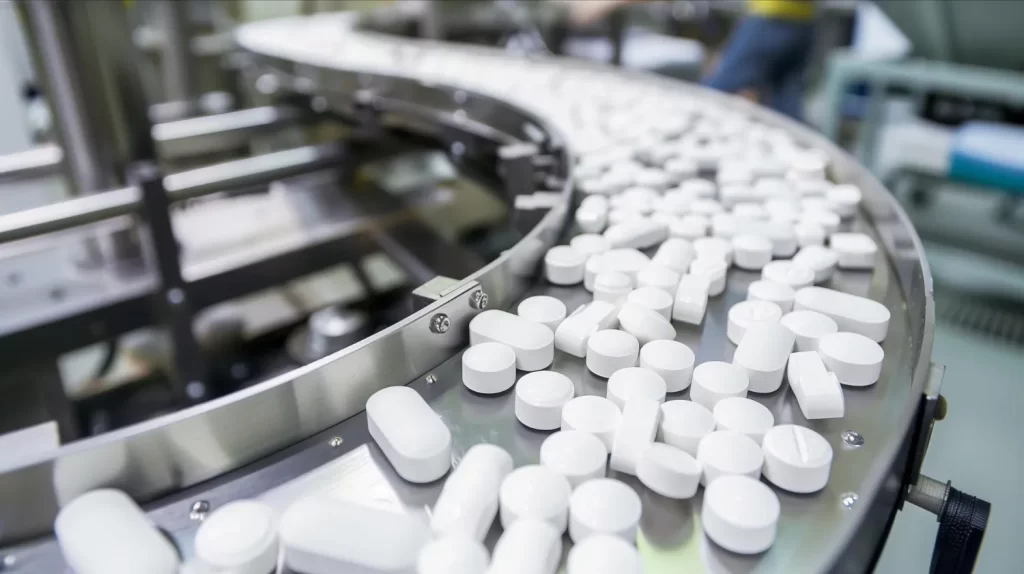
The global pharmaceutical industry is projected to generate $1.21 trillion in revenue in 2025, according to Statista. The U.S. alone is expected to account for more than half of that total, reaching $660.04 billion, thanks to its advanced healthcare systems and strong R&D investment.
Among therapeutic areas, oncology remains the top revenue generator, with a market value projected at $208.86 billion in 2025, growing 7.6% year-over-year (Becker’s Hospital Review). Other high-performing segments include:
Looking further ahead, Statista forecasts a compound annual growth rate (CAGR) of 4.77% from 2025 to 2029, pushing total industry revenue to $1.45 trillion by 2029.
GLP-1 drugs, used for treating Type 2 diabetes and obesity, are also a major factor in current growth. Sales of these drugs topped $1 billion in 2024 and are expected to keep rising in 2025, with companies like Novo Nordisk and Eli Lilly expanding their production capacity to meet global demand (Investing News Network).
The steady increase in market size reflects global demand for chronic disease treatments, innovation in biotech and specialty drugs, and broader healthcare access in emerging markets.
Several fast-moving segments are driving the pharmaceutical industry’s growth in 2025. These areas are attracting the most investment and shaping the future of drug development.
Gene and cell therapies are becoming major players in the market. These treatments target once untreatable diseases, offering new hope and high revenue potential.
Bispecific antibodies are another breakthrough area. These next-gen treatments are showing strong trial results in blood cancers and lung cancer.
Digital therapeutics and telehealth are expanding how patients access medications. Companies are adapting to online platforms to reach more people.
Immunology continues to grow through innovation. New biologics and targeted therapies are replacing aging blockbuster drugs.
These high-growth segments are reshaping the industry, moving it toward more precise, tech-enabled, and personalized treatments.
Rising market value, demand for advanced therapies, and a push toward personalized medicine are opening new opportunities—but also raising the bar for manufacturers and suppliers.
Pharma companies are under pressure to scale faster, launch more complex products, and meet tighter compliance standards. This means production lines need to be more flexible, efficient, and GMP-compliant.
For machinery suppliers and production partners, the message is clear:
Canaan supports this shift by providing reliable, high-performance machinery that helps pharma companies stay competitive. From capsule filling to automated packaging, our systems are built for the demands of today’s pharmaceutical production.
The pharmaceutical industry’s growth in 2025 isn’t just about numbers—it reflects a global shift in how healthcare is delivered, accessed, and advanced. For manufacturers and suppliers, this means moving quickly, investing wisely, and staying aligned with regulatory and market demands. The winners in this space will be those who combine quality, efficiency, and the ability to adapt.
Canaan is here to support that journey—with machinery and solutions built for what’s next in pharma.


Batch-to-batch variability and low tablet production yields remain persistent challenges in solid dosage manufacturing. When inconsistencies arise, manufacturers often focus on excipient selection or process parameter adjustments. In many cases, the underlying issue is in the selection of the granulation process itself. This article explores Canaan’s granulation solutions for different material characteristics and process requirements, […]
Quick Answer Continuous manufacturing pharmaceutical systems merge blending, granulation, and compression into one unbroken line to meet GMP compliance under 21 CFR Part 11. These lines run in-line, real-time quality monitoring instead of end-of-batch testing, typically handling 5 to 40 kg per hour. Canaan’s integrated pharmaceutical continuous manufacturing lines are built to meet these standards, […]
Quick Answer Cleaning validation in pharmaceutical manufacturing is the documented proof that equipment meets a set residue limit every time. A validated wash runs pre-rinse, detergent wash, rinse, and dry stages under fixed time, temperature, and pressure parameters. Canaan’s QD Series washing stations combine automated washing and drying in one controlled cycle, with key process […]
 +86-577-67378828
 canaan@chinacanaan.com